INTERVIEW: Director Jay Silverman On How The Film 'Yale' Was Made

EXCLUSIVE INTERVIEW: JAY SILVERMAN ON 'YALE'
Interview by Michael J. Lee, Executive Editor for RadioFree.com
June 19, 2026
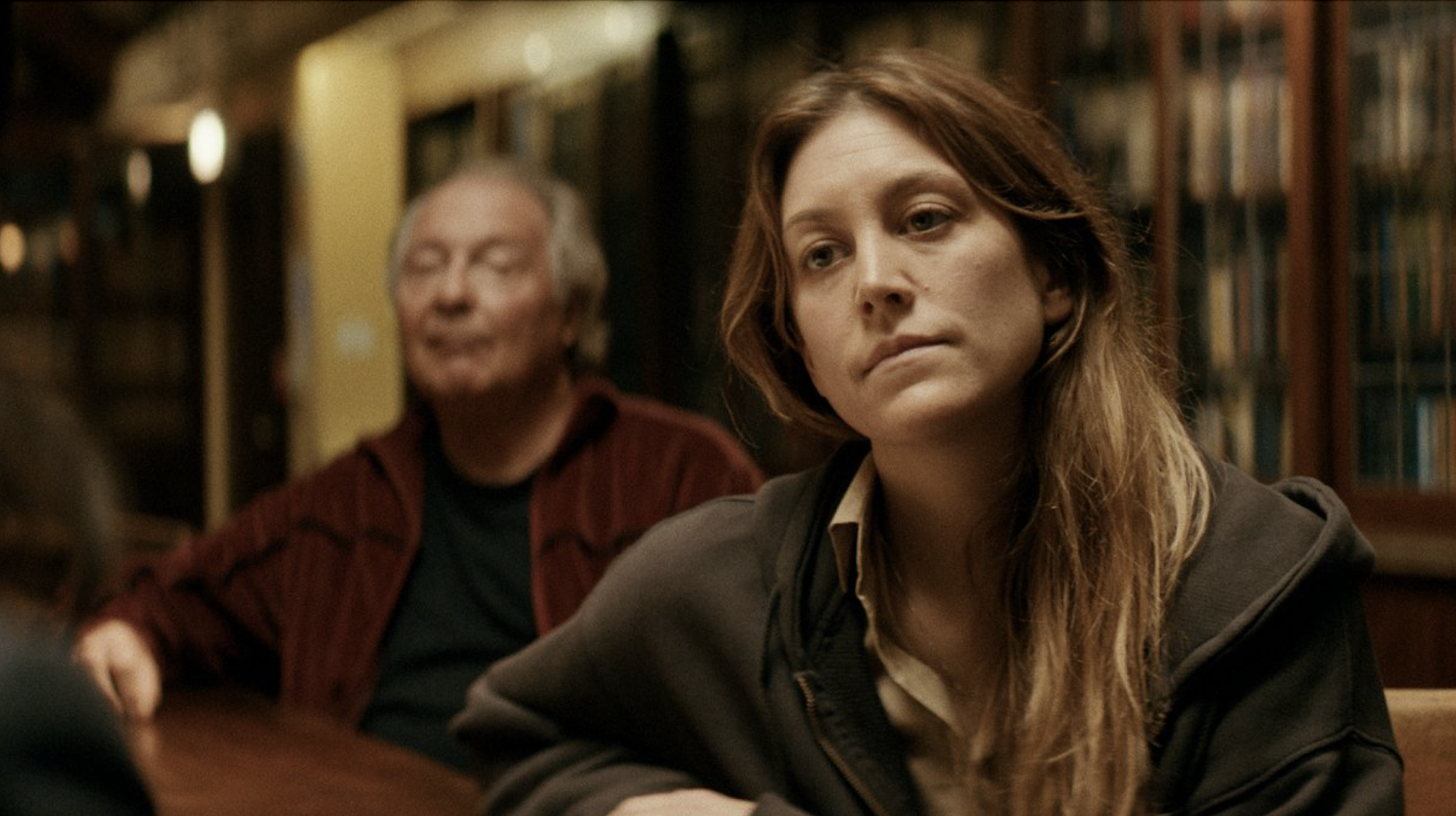
In the independent comedy/drama Yale, a troubled writer (Caitlin McGee) reluctantly seeks out her estranged father (Kevin Dunn) when a medical emergency leaves her with few alternatives. Forced to confront the charming-but-irresponsible man who abandoned her as a child, the two embark on a road trip where she uncovers his chronic history of running away, even as she grapples with the impact his leaving has had on her own lifelong pattern of self-sabotage.
Based on the true story of screenwriter Van Billet's own grandfather, Yale made its world premiere at LA's Dances With Films festival as the 2026 opening night presentation. In this exclusive interview, director Jay Silverman talks about the 5-year journey to get the movie in front of an audience, the lead performances that power the poignant narrative, and specific details about the process of an independent project that could assist aspiring filmmakers.
Watch the trailer and follow home video release dates on Yale's official website.
RadioFree.com: How did you come to Kevin Dunn for the critical role of your title character Yale Parker?
JAY: Our casting agent Beth Holmes was the conduit to all the talent. And we were super fortunate to have [talent agency] Gersh kind of give their blessings to the screenplay. We're the first film to actually start shooting in Los Angeles a year ago, and the business was really, really challenged. And you start to recognize it's not just the land, it's not just the magnificent crews, but the talent that is willing to work on an indie [where] they can sleep in their own beds and perhaps not even disrupt their lives for a couple of days. And we took advantage of that. This is my fifth movie, and for me to make this statement is consistent with what I've made. I mean, you can't get secondary players to work on an indie movie unless circumstances are delightful for both parties. And the players that fill the cast, all of them were uniquely superb. And they provided a level of not only continuity, but professionalism that is very rare, especially in indie movies. So I toast that. We're very fortunate.
As someone based in Los Angeles, is it always your first choice to film here? We always hear about other locations offering incentives for productions to move.
I scouted, in this particular case, shooting the movie in the city [in which] it actually takes place, Philadelphia. Screenwriter Van Billet is actually from Philadelphia, and this is the second movie we made. So it would have been a natural thing for me to take advantage of that on top of his convenience of being there. But it seems that a big part of pulling off an independent movie is understanding the right and left side of your brain. I'm lucky because I am a right brain/left brain guy, which is unique. So I know what it's like to crunch numbers on a movie. And when you start getting into how you pull off an 18-day shoot with a budget that is desiring to have recognizable people and, at the same time, all the things that I have intuitively in Los Angeles...That's why people choose to shoot on the West Coast. The weather and the ability to make it look like pretty much anywhere else.
Given that you and screenwriter Van Billet are also credited as producers on Yale, I'm guessing there's a lot of division of labor with responsibilities behind the scenes. How would you describe your working relationship with him?
Van and I worked on a movie called Pencil Town that later was named Saving Paradise. Again, a true story and very fulfilling for me. Upon completing that, he shared the screenplay for Yale and pitched it to me as his own blood--Yale is his grandfather. So when you start to get into the concept of what delights filmmakers, you become a part of the evolution of a project. And there's no way for me to buy his script and produce his script without injecting my team and my involvement, because I'm the kind of director that wants to own it, be a part of it. And inasmuch as it was so well written and enticing, we had a lot of work to do. And the first goal when you make an independent movie is "How are you going to do it?" In the movie Yale, it's based on a true story of an individual from the '40s. So we had to contemporize it. And that took a lot of time. We've been developing this movie for over five years. I even made a movie called Camera with Beau Bridges in between developing this movie because I did not want to begin the process of shuffling another film to production too soon. I wanted it to be ready. And pretty much the most fulfilling part of this process was collaborating with Van. And I've never told anybody this, but I think it gives you a little perspective on how I operate...We both produced the movie. And at one point, I wanted to walk away. We were under so much stress trying to make this movie for 18 days. And this is my fifth film, so this isn't me just sharing my first-timer conversation. We had problems with unions. We had challenges with crew and politics, like all films have. And I discovered that the only reason I stayed in the game was my loyalty to [Van]. And it's like your respect for yourself is more important than losing control, you know?
What were some of the biggest logistical hurdles in shooting a movie in only 18 days?
You know, it's a challenging question because the first instinct is for me to tell you we got rid of scenes we didn't think we needed, because they were going to eat up days of our schedule. That's easy stuff. The complex stuff is this idea of trying to, as a filmmaker, juggle, "Are we going to shoot this on location? Are we going to build a set? Are we going to shoot this with the anticipation of adding CG? Are we going to just shoot what's there?" And these are decisions. I'll give you one example that I think is inspiring. I've made four movies, and all the movies have cars in it, and they have people driving around talking. And they're all independent movies, but a lot of them weren't unionized. And we were shooting the actors from the front seat driving, which is, I guess in hindsight, not really kosher. But the reason I share this with you is because in the last few years, a company has developed, essentially, a reservoir of multi-angled stock footage for regions. So in the case of this movie, we purchased from them stock footage of Philadelphia, of Newark, of New York City. And when you shoot the car footage on a stage greenscreen, you can now buy eight angles of that exact moment. So if you choose to do a two-shot through the back seat of the front windshield, you'll have that angle. And if you go to the passenger side and shoot the driver, you can see what really was on the left side of the screen. And the same thing applies to the back window. And this never existed before. And almost all television car stuff now, unless you're shooting in the desert, is done on stage because the greenscreen is so incredibly well done that you can't. So we piggyback all those in one day. Now, one of 18 days to just shoot car shots is feasible. But try to do that in real locations? Forget about it. You're talking about Philly one day, New York another day...
One of my favorite shots in the film is when Caitlin McGee's character Mackenzie hits an inappropriate fan with a book and the pages go flying. It's a small moment, but it looks cool and dramatic. Did you create a prop breakaway book for that effect, or did Caitlin swing it so hard that it flew apart?
Well, let's talk about the process, because I think it sounds like you want to know the process. The written word says, "The character's going to be antagonized by a fan, and at one point, you're going to insult him and he's going to lash out and then you're going to get physical." So the question when you go into pre-production is, "To what extent are we going to do this?" And then you decide, "What do we have to do, and what do we know we can cheat on the other side, in post-production?" So I knew we had to build a prop book that fell apart, which we did. We also knew--even though the man is a stuntman--that hitting him on the face could likely be dangerous because she is committed in her craft at living the reality of it, so she has to hit him. And I think any filmmaker would caution himself with a prop like that, that he can break his nose, you know? And so full reveal: we worked with an incredible visual effects guy. And in pre-production, we discussed what we were going to do. We were going to whip the book inches from his face, and also mix flying pages, because the flying pages fell out of the book. And the visual effects guy took the two pieces and merged them. And it's a piece of art. I'm not going to dispute it--I didn't do it, he did it. And the real truth is it was just one take, the pages flew, but the believability comes with audio, hearing it--a smack and the visibility of the both [characters] looking like they really did the job. And it's an interesting thing for an independent movie, because that's where everything goes wrong on independent movies. You think, "Oh it'll be no big deal, he'll just hit him with a rubber book so it won't hurt." [But] it's not easy so you have to prep that stuff and do tests. Anyways, I feel blessed because we were able to do it all in one shot.
Speaking of the character of Mackenzie, how was the process of finding Caitlin McGee for the role? Was there an extensive audition process involved?
It's an interesting question because--and I'm giving information that a lot of first time directors don't know--more likely than not, you're not going to get an audition out of these people. You're just not, because she's a successful actress that does what I consider to be a superlative work. So you have to look at her body of work and [take] a leap of faith. She was lucky enough to have a manager that fought for her, and she was lucky enough for us to recognize that we were getting way more than we thought we were getting. And she is an extraordinary talent. Just conceptually waking up in the morning and watching her do a scene that could be as much as a minute and a half long...And not just enabling the character to come through, but doing it with such grace, which is very vivid in her performance. Over the five years we developed this project, we were very keen on what should stay in the script and what shouldn't verbally. And a lot of what independent filmmakers don't understand, including myself up until my fourth movie, [is that] you don't realize that actors, especially good actors, don't need to say a lot of stuff--they show it in their face. And I use this example of a character that's fallen apart. You know, a great actress will show you she's falling apart. You don't need her to say, "I haven't slept for a week. I'm losing my mind. I can't see straight." A good actress will go, "I don't need to say any of that. I'm going to deliver all that with my emotions visually." And that's what we did with the whole movie. And Kevin was an artist at that. That's what he does for his entire 45-year career is deliver both dramatic and comedic expertise that really gives a director goosebumps. I mean, we screened the movie last night for the first time to an audience, we had the world premiere, and I have to tell you, I'm looking at a hundred foot screen, and there is Kevin dominating at least 40% of the entire screen in an emotional scene. And it's the first time I saw that he is not only crying within, but he is so physically a part of the process that I was just mesmerized, [even though] I edited it a hundred times. The same thing goes with Caitlin. And you don't realize the nuances when you're shooting until you see it on the big screen. And regrettably, most independent filmmakers only see that one time when they're at a festival.
With such an exhaustive 5-year process of getting this movie to the finish line, how did everyone on the team feel about finally sharing it with an audience at your world premiere?
I mean, I can only repeat what I saw. What I saw was Kevin, who is one-of-a-kind...It's the first time he saw the movie. He saw some tidbits when we did ADR, but the truth of it is, it's the first time he saw it all put together, and he was just mesmerized. And same thing with Caitlin. You know, we've mentioned 18 days, and you don't really appreciate the challenge of an actor that has the capability to retain character for 18 days. [With] the tasking and the logistics of making an independent film, you don't have the advantage of shooting in continuity. So you might be shooting that very emotional moment, that altercation in the movie, and literally five minutes before that, they were celebrating. Literally piggyback with it. And that's where you see the gift of these actors. It's truly extraordinary. And, the same thing could be said [about] how do you pull it off physically, to do 18 days? Because we're all burnt out, sincerely.
I imagine it's also fulfilling to see the audience reaction as the story plays out in front of them. As a filmmaker, what type of viewer feedback do you find most gratifying?
You know, Rachael [Harris], who plays the agent in the movie...We've seen her in Hangover and all these brilliant comedies. She really, really did a phenomenal job on this movie. And the content of what she had to deliver involves some deep, emotional requirements and understanding with her life and her breath. She was tearing up at the Q&A. And what made it so incredibly profound for me is that's why I made the movie. Because in my view as a filmmaker, the role that I take, my fulfillment comes from wanting to do this movie for my three daughters. I went through a horrible divorce, and they were unfortunately victims of that horrible divorce. And now, they're adults and they're in their early 30s, late 20s. And I have to say, the movie in a generic way illustrates the human concept of seeing something in front of your very eyes where a person solves a problem in a way that you never thought was possible. And in this particular movie, you've got two people that hate each other. You've got two people that essentially have been alienated, specifically from Caitlin's point of view. Her character hasn't seen her father in over 30 years because he abandoned them. And then [you] find out later you've lived with it your entire life because you never dealt with it. Those are the wonderful things that happen as a filmmaker when somebody who's seen the movie says, "That scene changed my life. I know now that it's possible to heal something." That's why I do what I do.
Jay, thanks for your time today, and congratulations on the film. Hope to speak with you soon about your next project!
Thank you very much, Michael...I look forward to it!